
Trope Finder
TropeFinder is a web-based platform that allows readers to discover, explore, and filter books based on story tropes, themes, and emotional tones. The project aimed to simplify the book discovery experience by focusing on how readers emotionally connect with stories rather than just by genre or author.

Project Date: June 20th-July-28th
Location: Kennesaw State University
People Involved In This Project: Allison Jones (Team Lead), Jackeline De La Luz (Assistant Team Lead), Niang Lam, & Genesis Ramos
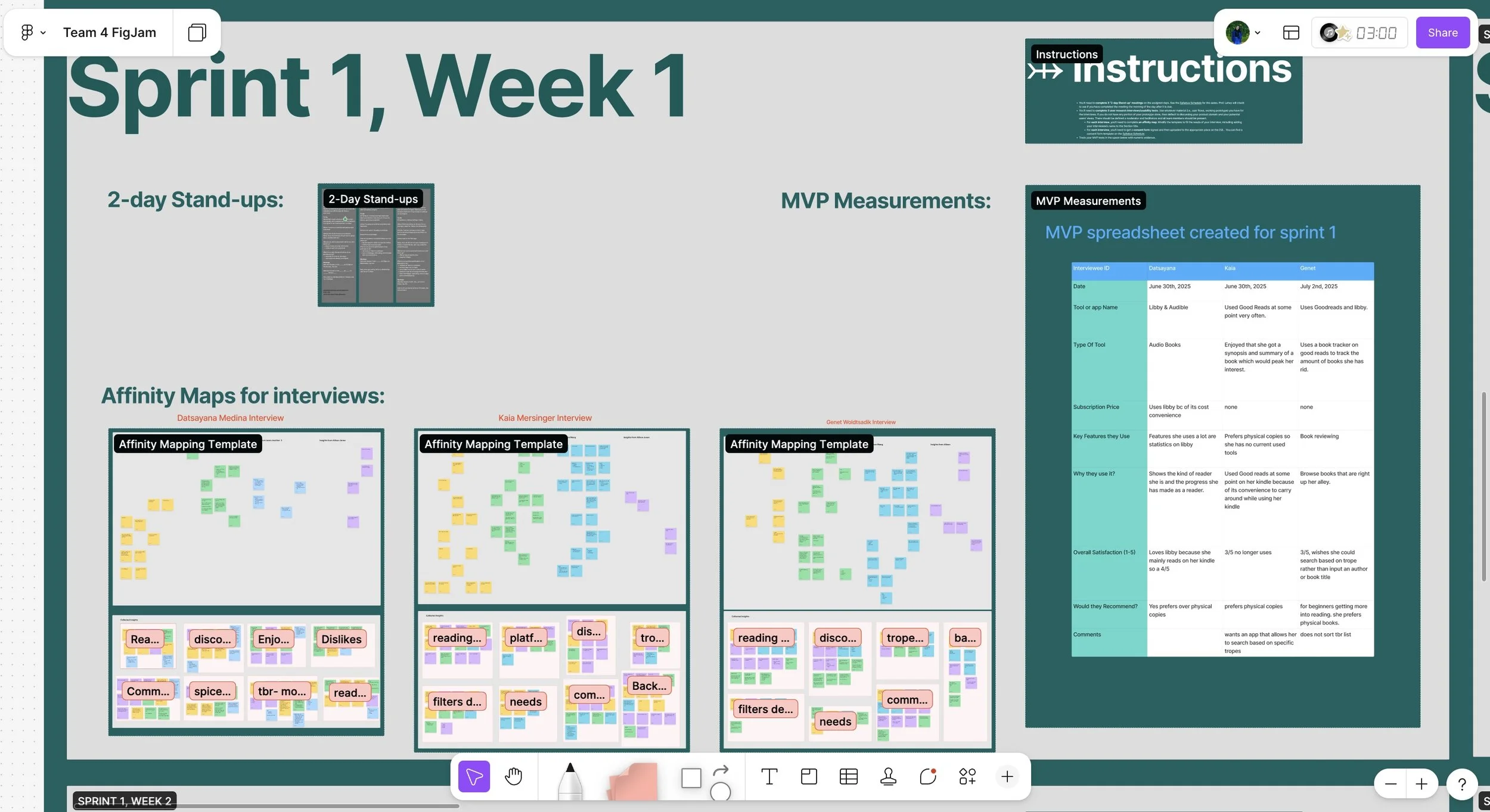
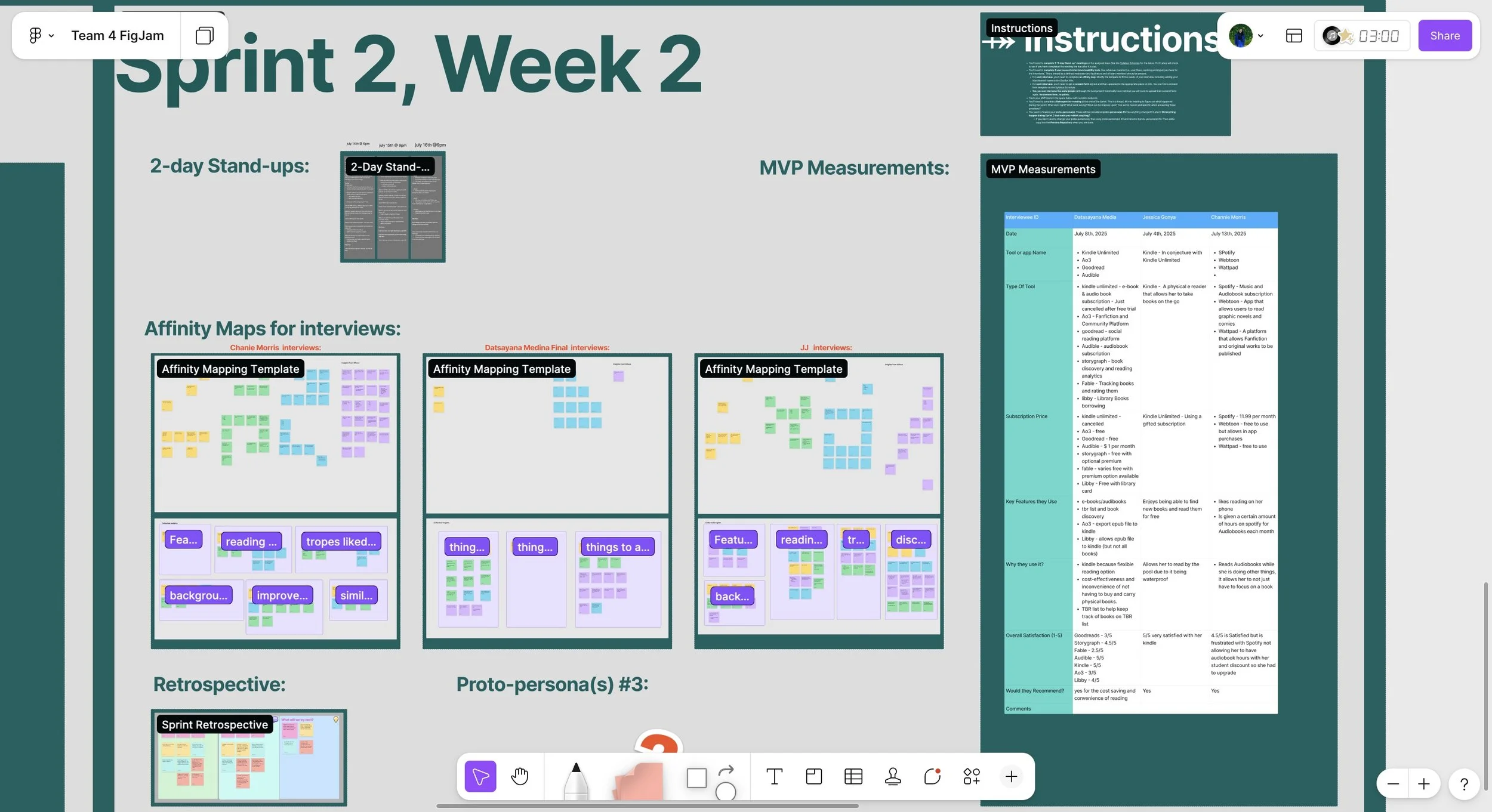
Over four weeks, our team conducted competitive analyses of platforms like Goodreads and StoryGraph and interviewed frequent readers. We identified a shared frustration: existing platforms recommend books based on algorithms, not nuanced story elements or emotional impact. We followed the lean UX process.
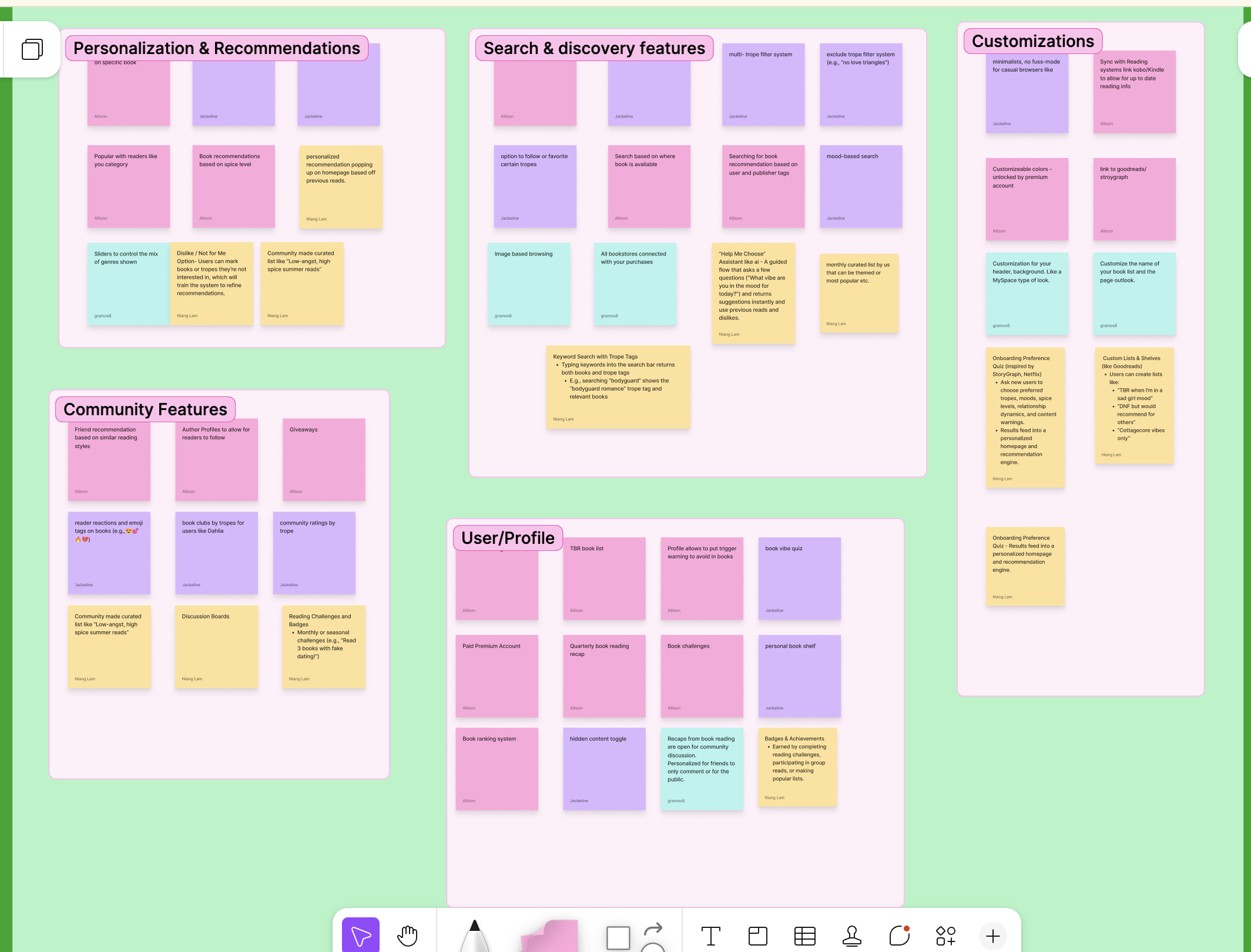
During our User Interviews, we created affinity maps for each person and we identified that all our interviews agreed on customizations for our app as well as some discovery features we could add. They all had some sort of history with GoodReads
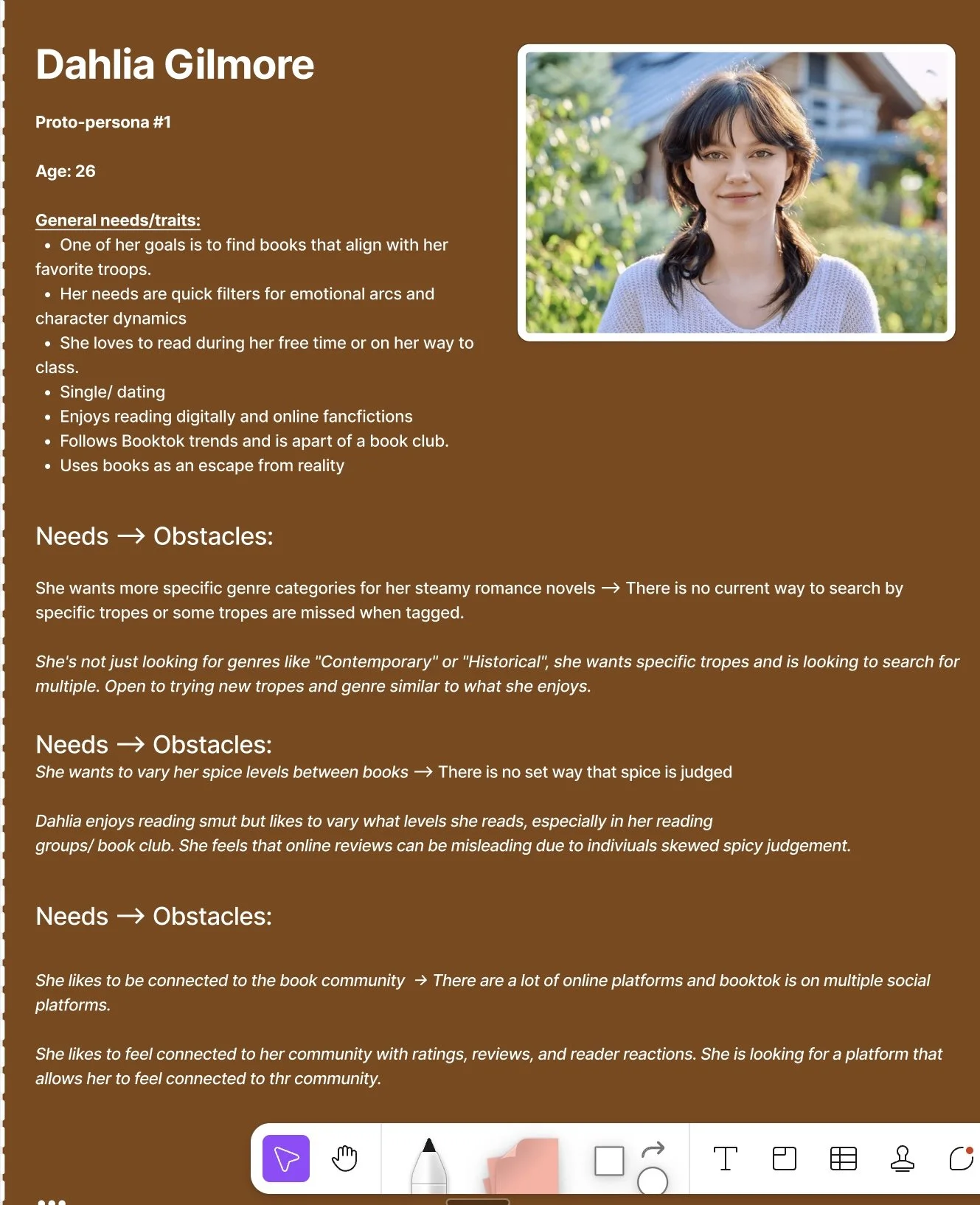
Dahlia Gilmore is the persona my team and I created based on the user interviews we completed. She is a 26-year-old avid reader who values discovering new stories through shared emotional experiences. They often feel overwhelmed by recommendation engines that lack personal connection and context.
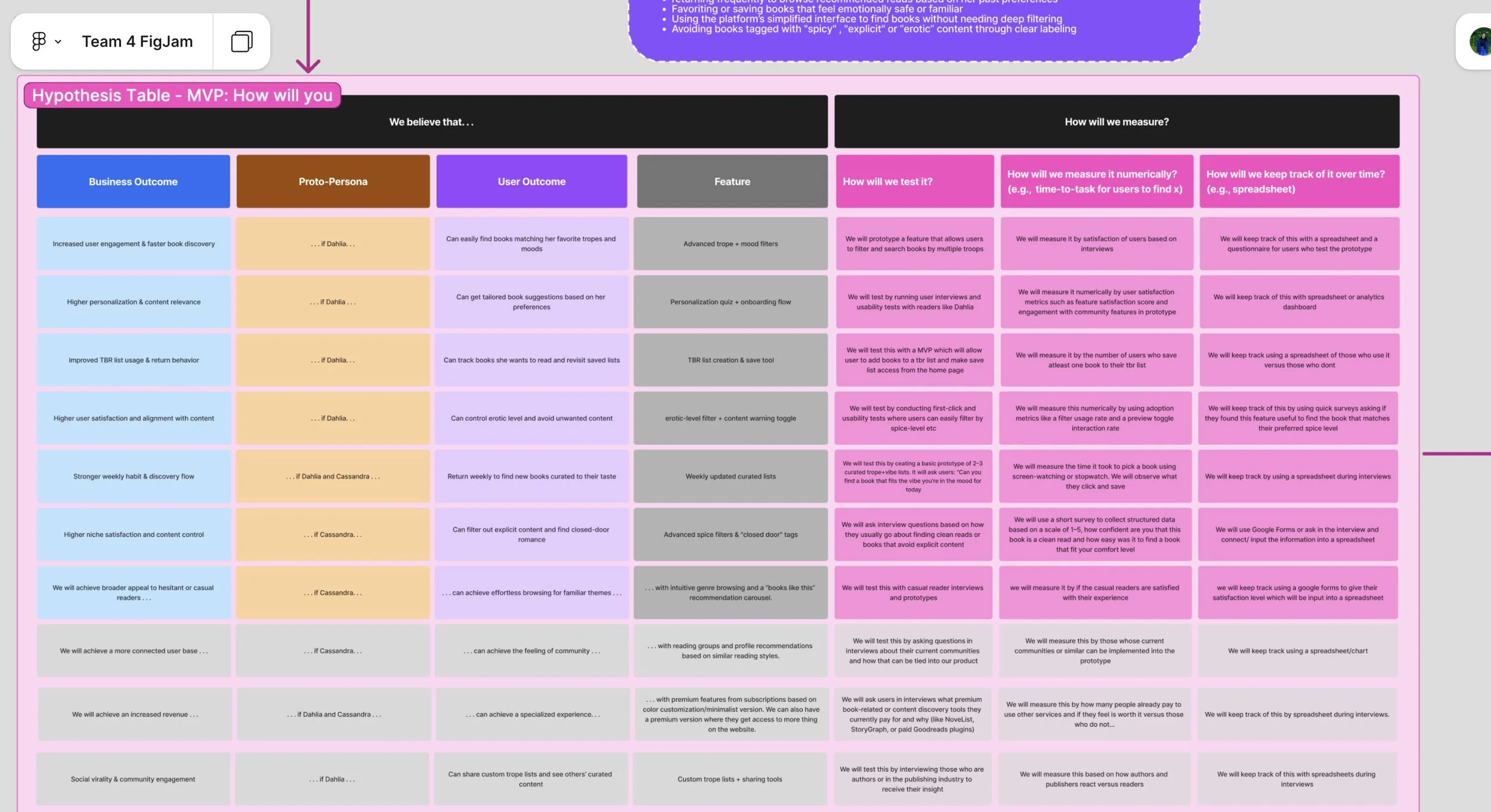
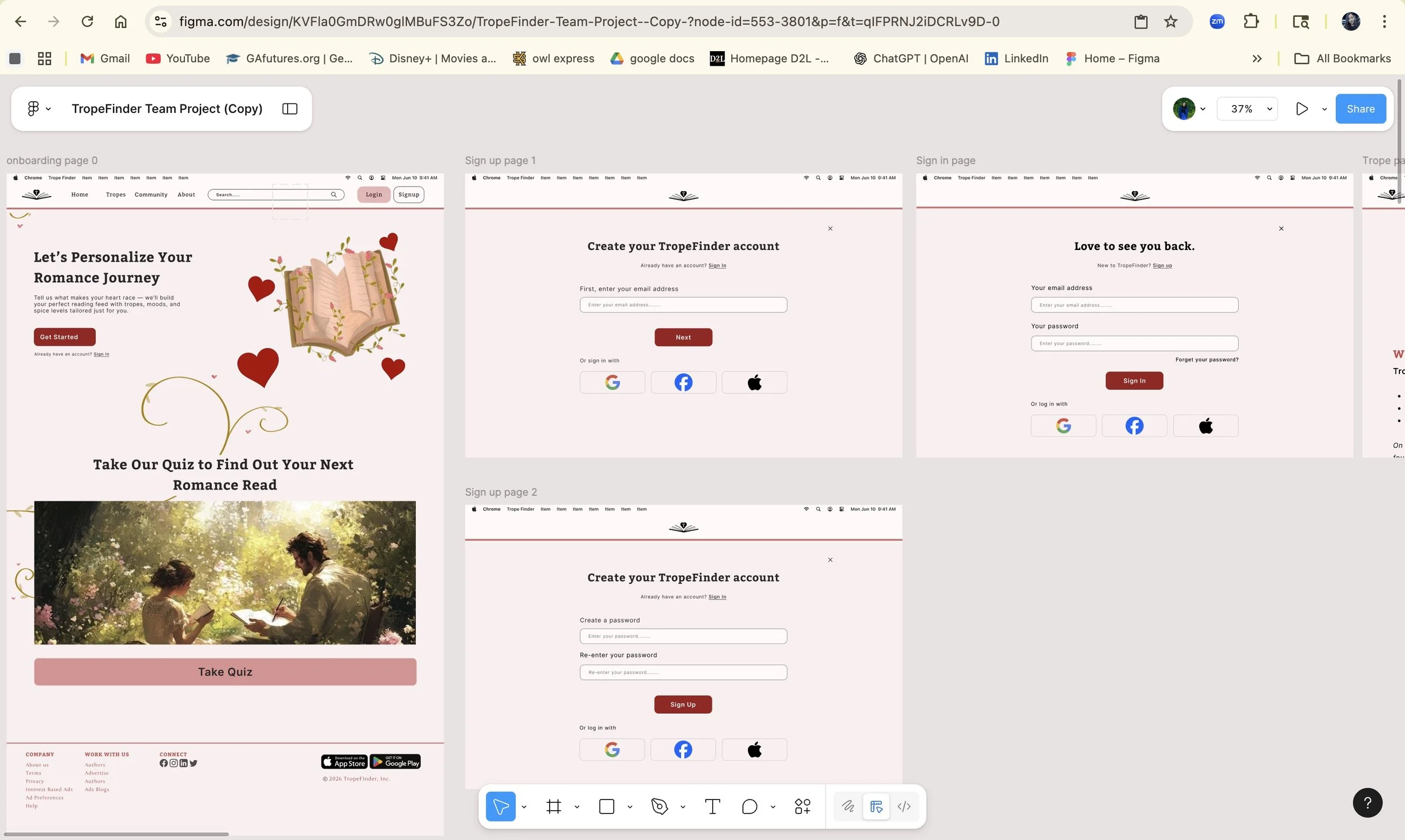
Through collaborative FigJam sessions, we brainstormed core interactions such as trope-based filtering, mood-driven searches, and visual trope maps. We created our MVP table to identify what must be built first, what can wait later for iterations, and what should be tested with users. Once we got this out of the way, we had very limited time with wire-framing so we went straight into our Figma design.The design goal was to help readers intuitively connect themes across different genres.
We tested the interactive prototype with 5 readers and refined search labels, visual hierarchy, and microcopy. Feedback emphasized the importance of clarity and discoverability, leading to a more intuitive interface for exploring stories through tropes. We interviewed the same people about 3 times throughout the process in order to better our design.
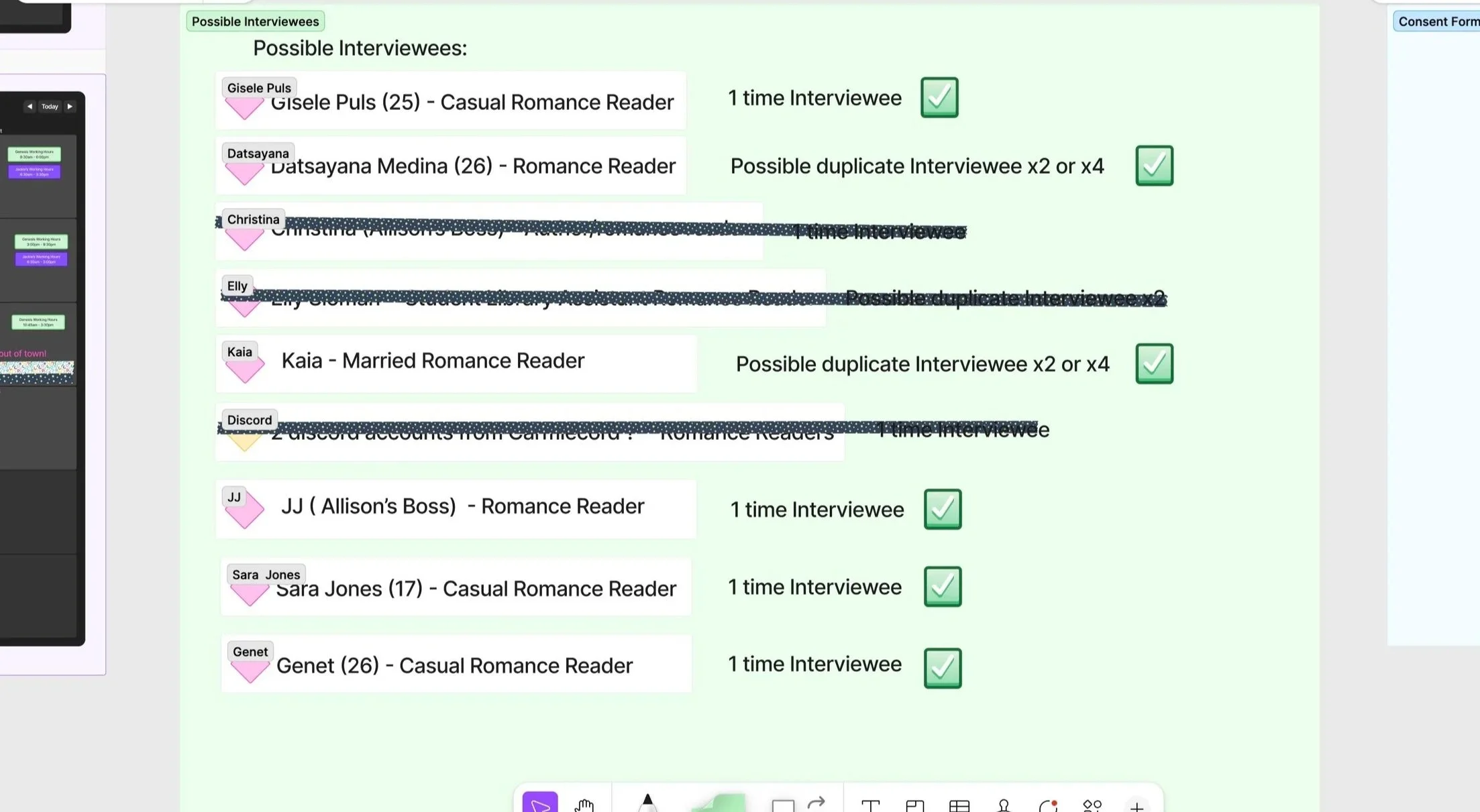
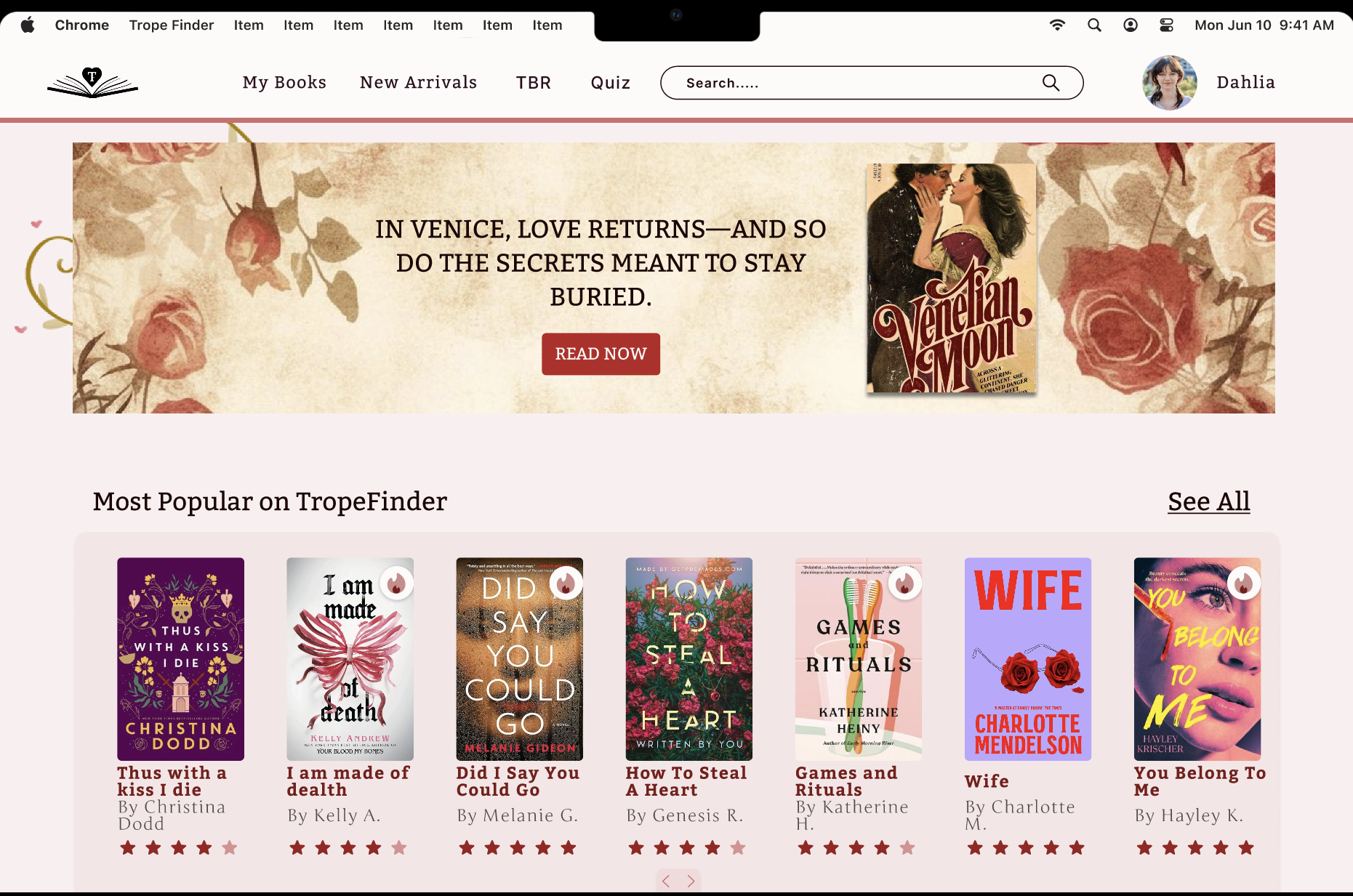
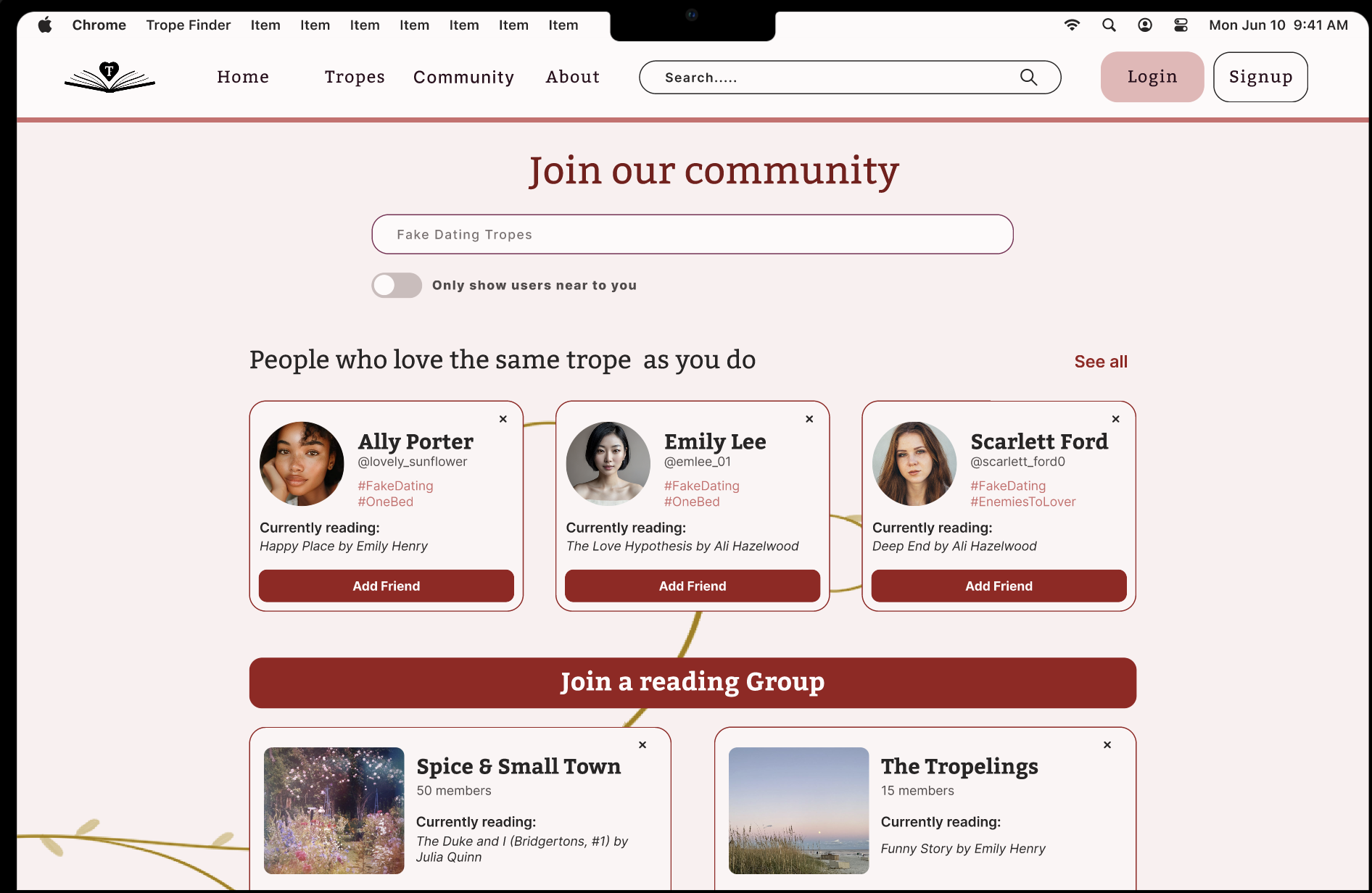
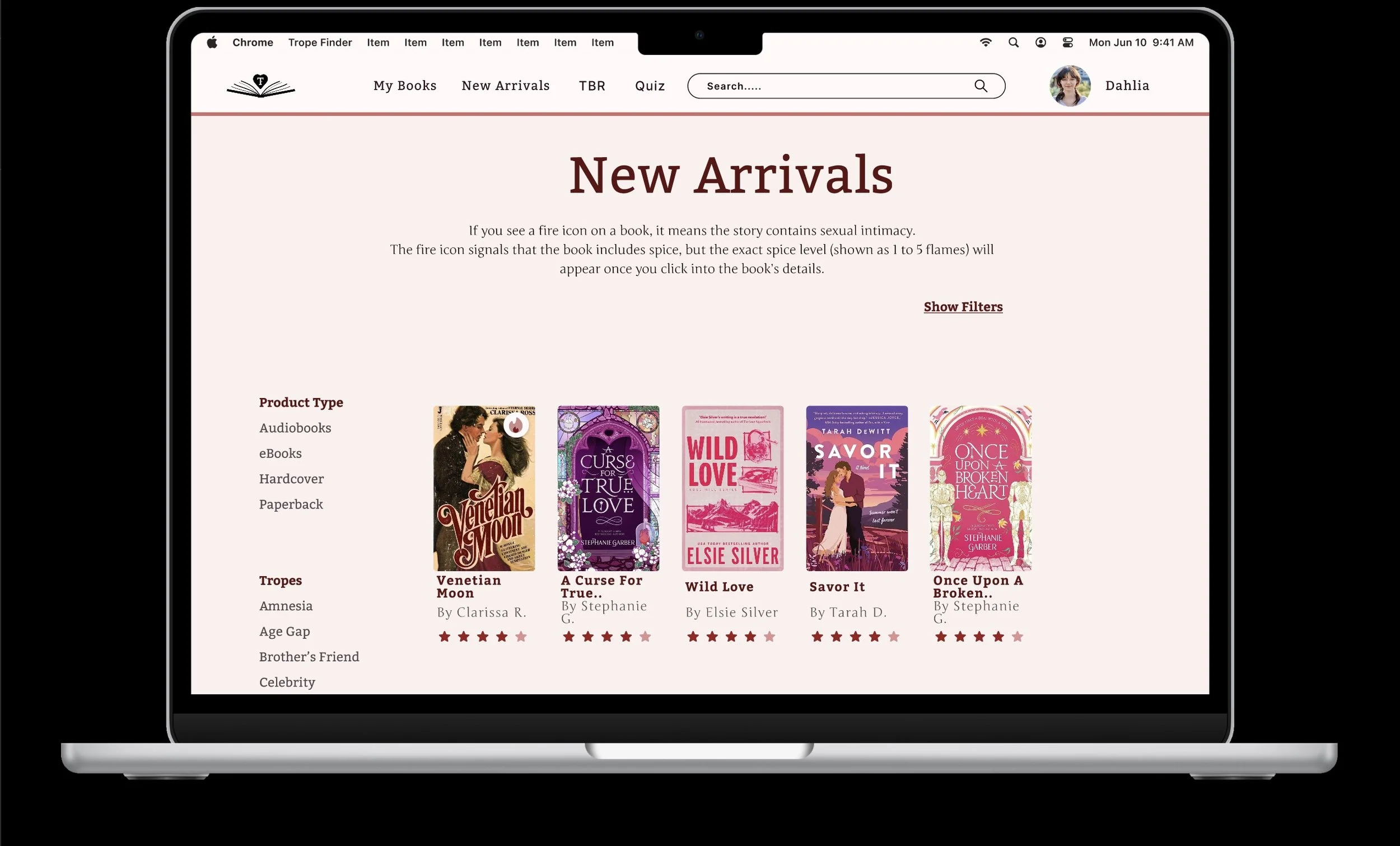
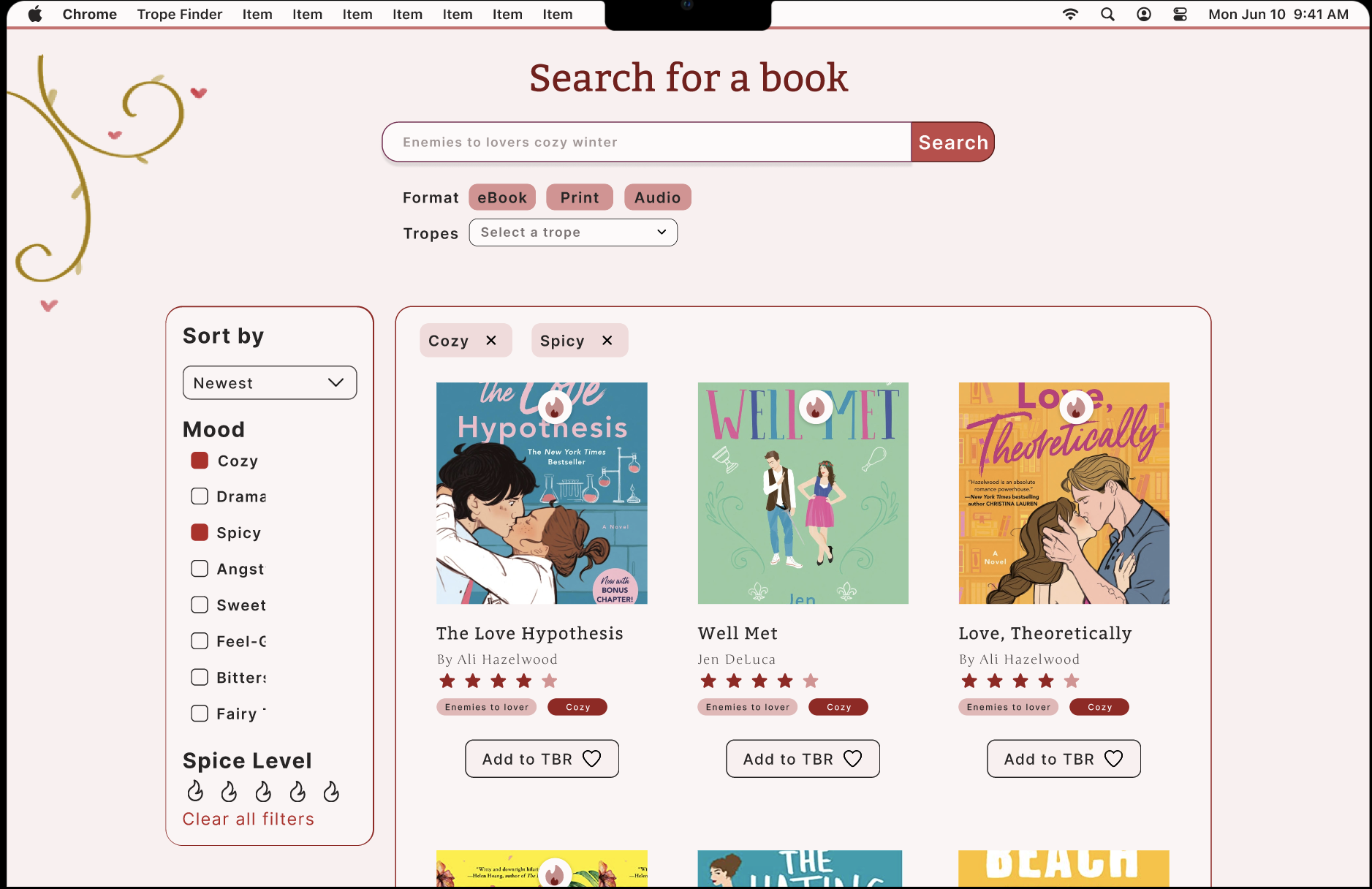
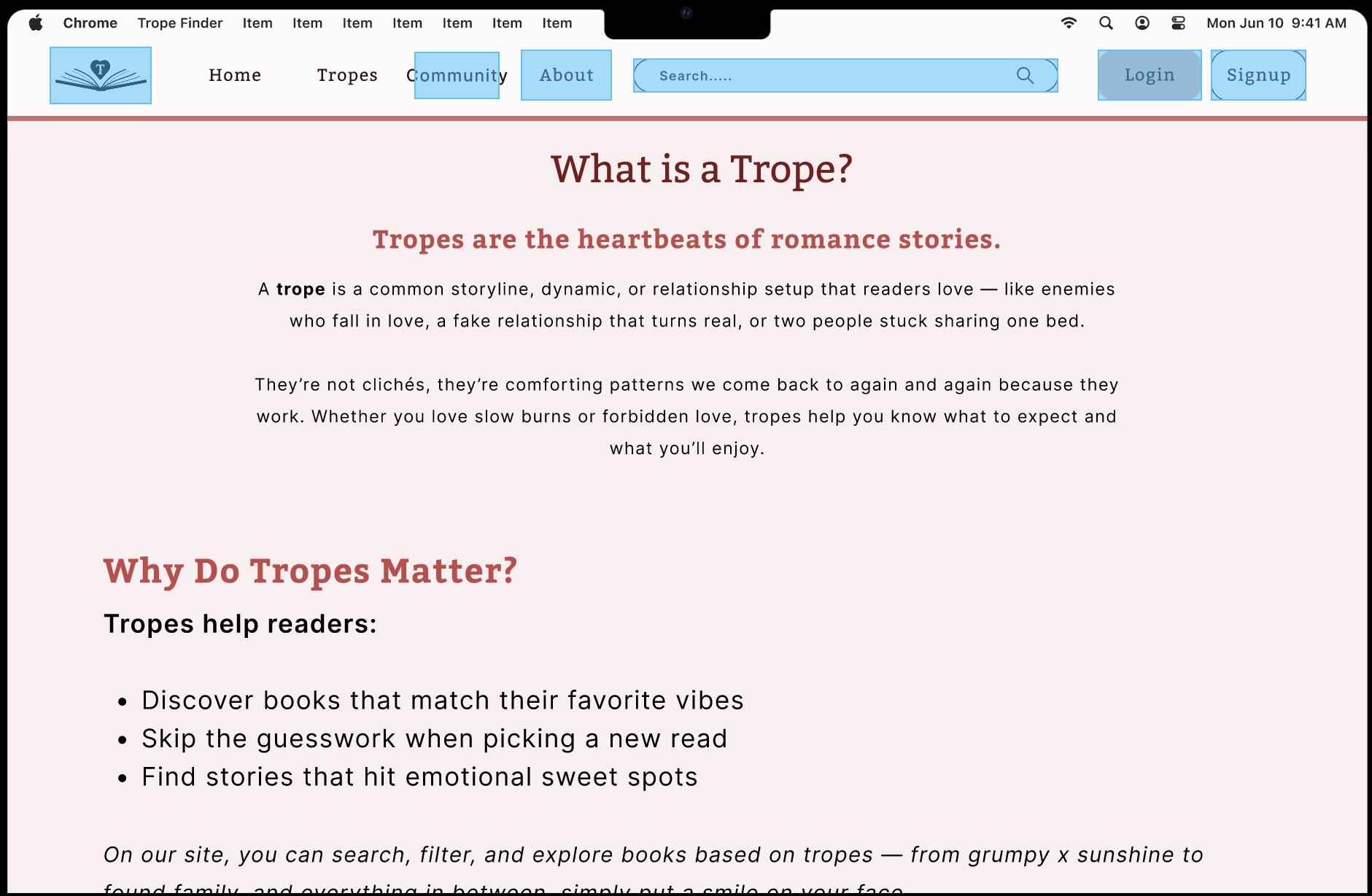
TropeFinder was a highly collaborative four-week sprint where I contributed across research synthesis, ideation, and interface design. I helped facilitate group brainstorming sessions in FigJam, organized insights from our reader interviews, and took the lead on designing the trope-filtering interaction model. I also collaborated closely with teammates to align visual styles, refine navigation patterns, and iterate based on testing feedback. This project strengthened my ability to communicate ideas clearly, adapt quickly, and support a unified design vision under tight timelines.